

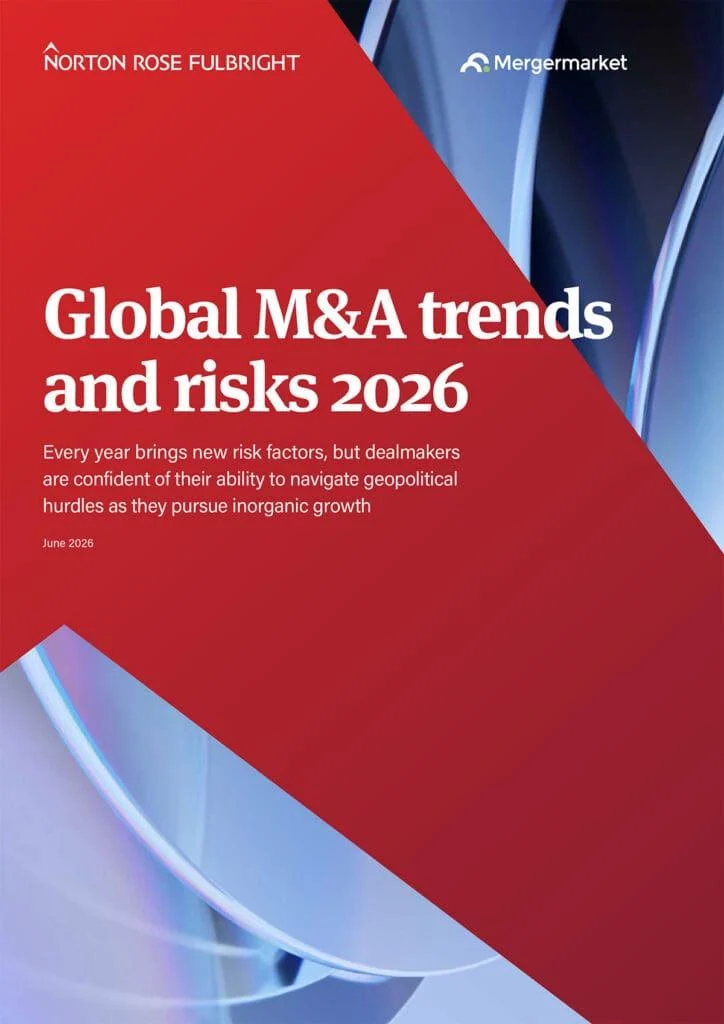
Dealmaker sentiment has experienced a significant resurgence in 2026, with confidence in global Mergers and Acquisitions (M&A) activity climbing well above the levels observed last year. This optimistic outlook is a central finding of the latest "2026 Global M&A Trends and Risks Report," a comprehensive analysis conducted by Mergermarket on behalf of the international law firm Norton Rose Fulbright. The report, based on a survey of 200 senior executives spanning corporate entities, private equity firms, and investment banks, paints a picture of a market regaining momentum, though a distinct "two-speed" dynamic is becoming increasingly apparent. This dichotomy is characterized by a surge in megadeals on one hand, and a more subdued performance in the mid-market on the other, presenting both opportunities and challenges for participants.
A Market Reawakening: Dealmaker Confidence Surges
The report’s primary takeaway is the robust increase in dealmaker optimism. After a period of heightened uncertainty and cautious activity, likely influenced by macroeconomic headwinds such as persistent inflation, rising interest rates, and geopolitical instability that characterized the preceding years, 2026 marks a notable shift. The survey data indicates that a substantial majority of senior executives now express greater confidence in the M&A landscape. This renewed optimism is not merely anecdotal; it is underpinned by a tangible expectation of increased deal flow and successful transactions in the coming fiscal periods.
This rebound in sentiment can be attributed to several converging factors. Firstly, the stabilization of certain economic indicators, such as a moderating inflation rate in key economies and a pause in aggressive monetary policy tightening by central banks, has created a more predictable environment for strategic planning and investment. Secondly, companies have had more time to adapt to the new economic realities, optimizing their balance sheets and refining their M&A strategies to align with current market conditions. Furthermore, the sheer volume of pent-up demand for strategic acquisitions, fueled by the need for inorganic growth, market consolidation, and access to new technologies or talent, is now beginning to translate into action.
The Two-Speed Phenomenon: Megadeals vs. Mid-Market Subduedness
While overall confidence is high, the report meticulously details a bifurcated M&A market. The term "two-speed dynamic" accurately describes the divergence in activity between large-scale, "megadeals" and transactions within the mid-market segment.
Surging Megadeals: The report suggests that the largest transactions are not only recovering but are experiencing a significant acceleration. Several factors contribute to this trend. Large corporations, often possessing strong balance sheets and access to capital, are well-positioned to undertake ambitious acquisitions. These megadeals are frequently driven by strategic imperatives such as achieving significant market share, entering new geographical regions, or acquiring disruptive technologies that promise substantial future growth. Private equity firms, particularly those with large funds under management, are also actively pursuing mega-buyouts, leveraging their financial firepower and expertise in complex deal structures. The current economic climate, while challenging for some, may present unique valuation opportunities for these larger players to acquire distressed assets or consolidate fragmented industries at attractive entry points.
Subdued Mid-Market Activity: In contrast, the mid-market, typically characterized by transactions valued between, for example, $50 million and $1 billion, is exhibiting a more cautious pace. Several reasons are cited for this relative subduedness. Mid-market companies and their potential acquirers may face greater challenges in accessing financing compared to their larger counterparts. Higher interest rates, even if stabilizing, continue to impact the cost of debt financing, which is crucial for many mid-market deals. Furthermore, smaller and medium-sized businesses might be more vulnerable to economic downturns and supply chain disruptions, making due diligence more complex and increasing the perceived risk for potential buyers. The ability to absorb the costs associated with extensive due diligence and integration can also be a limiting factor for mid-market players.
Key Drivers and Emerging Trends in 2026 M&A
Beyond the overarching sentiment and market segmentation, the report delves into specific trends shaping the M&A landscape in 2026.
Technology as a Primary Catalyst: The relentless pace of technological innovation continues to be a dominant driver of M&A activity. Companies across all sectors are seeking to acquire or partner with technology-focused businesses to enhance their digital capabilities, gain access to cutting-edge artificial intelligence (AI), machine learning, cloud computing, cybersecurity solutions, and other transformative technologies. This pursuit of technological advantage is particularly evident in sectors undergoing significant digital transformation, such as financial services, healthcare, and retail. The report likely highlights an increase in cross-sector technology acquisitions, as traditional industries look to integrate digital solutions to remain competitive.
Sustainability and ESG Integration: Environmental, Social, and Governance (ESG) considerations are no longer a peripheral concern but are increasingly integrated into M&A decision-making. Acquirers are scrutinizing the ESG performance of target companies, recognizing that strong ESG credentials can enhance brand reputation, attract talent, reduce regulatory risk, and improve long-term financial performance. Companies with robust sustainability practices are likely to be more attractive targets, and conversely, acquirers are increasingly looking to integrate ESG frameworks into their post-merger integration plans to unlock value and mitigate risks. This trend is expected to accelerate as regulatory frameworks and investor expectations around ESG continue to evolve globally.
Geopolitical Risk Mitigation and Reshoring/Nearshoring: The heightened geopolitical landscape of recent years has prompted many companies to re-evaluate their global supply chains and operational footprints. This has led to an increase in M&A activity focused on reshoring or nearshoring critical manufacturing and production capabilities. Companies are seeking to secure their supply chains, reduce reliance on single geographies, and enhance operational resilience. This trend may manifest in acquisitions of domestic manufacturing assets or strategic partnerships with companies located in politically stable regions closer to end markets.
Private Equity’s Evolving Role: Private equity firms remain significant players in the M&A market. While they continue to pursue traditional buyouts, their strategies are adapting to the current environment. With significant dry powder, they are actively seeking opportunities in sectors experiencing accelerated growth due to technological advancements or changing consumer preferences. Furthermore, PE firms are increasingly involved in "carve-outs" of non-core divisions from larger corporations, providing liquidity to the parent company while seeking to unlock value in the divested business. Their ability to execute complex transactions and implement operational improvements remains a key advantage.
Risks and Challenges on the Horizon
Despite the prevailing optimism, the "2026 Global M&A Trends and Risks Report" also casts a spotlight on the inherent risks and challenges that dealmakers must navigate.

Inflationary Pressures and Interest Rate Volatility: While inflation may be moderating, its persistence at elevated levels and the potential for renewed interest rate hikes continue to pose a significant risk. These factors can impact deal valuations, increase financing costs, and affect the profitability of acquired businesses, potentially leading to deal failures or post-acquisition performance issues.
Regulatory Scrutiny: Global regulatory bodies are increasingly scrutinizing M&A transactions, particularly in sectors deemed critical or those involving dominant market players. Antitrust concerns, foreign investment reviews, and data privacy regulations can create significant hurdles, leading to lengthy approval processes, mandatory divestitures, or outright deal blocks. Companies must proactively address these regulatory complexities during the deal origination and negotiation phases.
Integration Challenges: The success of any M&A transaction hinges on effective post-merger integration. Cultural clashes, IT system incompatibilities, talent retention issues, and operational inefficiencies can derail integration plans, leading to value destruction. The report likely emphasizes the critical importance of robust integration planning and execution to realize the intended synergies and strategic objectives of a deal.
Cybersecurity Risks: In an increasingly digital world, cybersecurity is a paramount concern. Target companies may harbor hidden cyber vulnerabilities that, if exploited, could lead to significant financial losses, reputational damage, and operational disruptions for the acquirer. Comprehensive cybersecurity due diligence is therefore essential.
Background and Methodology of the Report
The "2026 Global M&A Trends and Risks Report" represents the culmination of a rigorous research process undertaken by Mergermarket, a leading provider of M&A market intelligence. The survey, which forms the bedrock of the report’s findings, involved direct engagement with 200 senior executives. These participants represent a diverse cross-section of the M&A ecosystem, including chief financial officers (CFOs), chief executive officers (CEOs), heads of M&A, investment bankers, and private equity partners. Their collective insights offer a granular perspective on current market sentiment, perceived opportunities, and anticipated challenges.
Norton Rose Fulbright, a global law firm with extensive experience advising on M&A transactions across various jurisdictions and industries, commissioned and collaborated on the report. This partnership leverages the firm’s deep legal and commercial understanding of the M&A landscape, providing a crucial context for the data gathered by Mergermarket. The report’s publication typically occurs annually, providing a valuable benchmark for tracking evolving trends and risks within the global M&A market. The 2026 edition builds upon insights from previous years, allowing for an analysis of longer-term shifts and emerging patterns.
Broader Impact and Implications
The trends identified in the report have far-reaching implications for businesses, investors, and the broader economy.
For corporates, the resurgent M&A market presents opportunities for strategic growth, market consolidation, and access to critical technologies and talent. However, it also necessitates a heightened focus on risk management, regulatory compliance, and robust integration strategies. Companies that can successfully navigate the complexities of cross-border deals and integrate diverse operations will be best positioned to thrive.
Private equity firms are likely to continue their active role, seeking out value creation opportunities. Their ability to identify underperforming assets, implement operational improvements, and leverage their financial expertise will be crucial in a dynamic market. The report’s findings on the two-speed market suggest that PE firms may need to tailor their strategies to the specific characteristics of megadeals versus mid-market transactions.
Investment banks and financial advisors will see increased activity, facilitating deal origination, structuring, and financing. Their advisory services will be in high demand as companies seek expert guidance through the increasingly complex M&A process.
From an economic perspective, a vibrant M&A market can signal robust business confidence, contribute to capital allocation efficiency, and drive innovation. Increased M&A activity can lead to greater industry consolidation, potentially impacting competition, while also spurring job creation and economic growth through successful integrations and expansions. However, the concentration of activity in megadeals could also raise concerns about market power and competitive dynamics in certain sectors.
In conclusion, the "2026 Global M&A Trends and Risks Report" by Norton Rose Fulbright and Mergermarket offers a nuanced yet ultimately optimistic outlook on the global M&A landscape. While dealmaker confidence has surged, driven by a stabilizing economic environment and the relentless pursuit of technological advancement and strategic advantage, participants must remain acutely aware of the inherent risks. The persistent two-speed dynamic between megadeals and the mid-market, coupled with ongoing regulatory scrutiny and integration complexities, underscores the need for careful planning, diligent execution, and a forward-thinking approach to M&A in 2026 and beyond.
