

The Evolution of the Accent Chair: From Occasional Seating to Cultural Icon
An accent chair, historically referred to as an "occasional chair," is defined by its role as a supplementary design element intended to provide visual contrast to primary furniture like sofas or sectional units. However, the modern definition has expanded. Today’s premier accent chairs are viewed as functional sculptures. The distinction between a standard seat and an "iconic" chair often lies in its pedigree—whether it was birthed from a specific architectural movement or designed by a visionary who challenged the manufacturing constraints of their era.
Architectural Digest’s assessment involved placing twelve specific models into active use within both domestic and professional environments, such as the Condé Nast offices in New York. Reviewers utilized a grading system based on a one-month minimum immersion period, ensuring that the "prowess" of each chair was measured by actual human interaction rather than staged marketing imagery.
Contemporary Comfort: The Rise of the Knoll Willo Perron Bun Chair
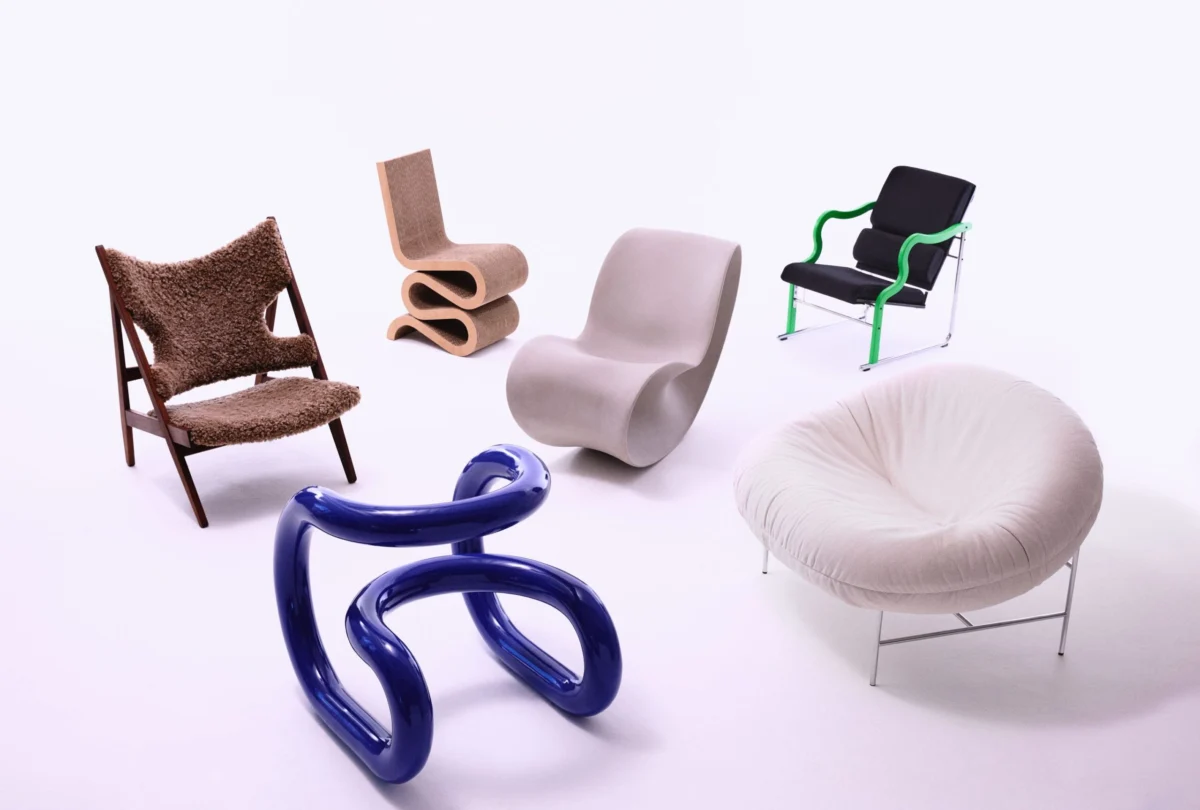
Leading the category for modern comfort is the Knoll Willo Perron Bun Chair. Designed by Willo Perron—the creative force behind high-profile projects for Beyoncé and St. Vincent—the Bun Chair represents a shift toward "plush" maximalism. Unlike the rigid structures of the mid-century period, the Bun Chair features a pillow-like build supported by sleek chrome legs.
During testing at the Condé Nast headquarters, associate commerce director Lori Keong noted that the chair’s oversized dimensions allowed it to function as a collaborative space, accommodating two individuals simultaneously. While the white upholstery variant presented practical challenges regarding maintenance, the chair’s availability in five colorways provides versatility for various environments, from high-end entertainment rooms to curated playrooms. Its design philosophy is a direct evolution of the 1970s bean bag, refined through the lens of 21st-century luxury.
The Architectural Statement: Frank Gehry’s Wiggle Side Chair
For environments requiring a sculptural focal point, the Wiggle Side Chair by Frank Gehry for Vitra remains an industry benchmark. Introduced in 1972 as part of Gehry’s "Easy Edges" line, the chair is constructed from approximately 60 layers of corrugated cardboard held together by hidden screws and fiberboard edging.
Commerce editor Audrey Lee highlighted that despite its humble material composition, the chair conveys a sense of luxury through its fluid, ribbon-like form. Gehry’s objective was to provide a durable, low-cost alternative to traditional furniture, yet the Wiggle Chair has since become a high-status collector’s item. Its compact footprint makes it an ideal choice for urban lofts or library nooks, though its cardboard nature necessitates a cautious approach to liquid proximity.
Mid-Century Foundations: The Eames and Saarinen Legacy
No analysis of iconic seating is complete without the Herman Miller Eames Lounge Chair and Ottoman. Debuting in 1956, designers Charles and Ray Eames sought to create a chair with the "warm, receptive look of a well-used first baseman’s mitt." Nearly seven decades later, the chair remains a symbol of executive sophistication.
The testing process confirmed that the Eames’ ergonomic tilt and swivel mechanism provide a level of comfort that defies its complex, multi-piece plywood shell construction. Tester Elise Portale observed that the chair’s enduring popularity is rooted in its "impossible" versatility—it supports a variety of sitting postures while maintaining its aesthetic integrity.
Similarly, the Knoll Womb Chair, designed by Eero Saarinen in 1946, continues to dominate the "cocooning" sub-category. Commissioned by Florence Knoll, who requested a chair that she could "curl up in," the Womb Chair utilizes a foam-covered fiberglass shell to create a supportive, enveloping environment. Contributor Collier Sutter noted that the chair’s comfort is structural rather than purely cushion-based, allowing for "crisscross" seating and various lounging angles that traditional chairs cannot accommodate.
Bauhaus Influence and the Minimalist Aesthetic
The minimalist sector of the marketplace is largely defined by the Wassily Chair and the Barcelona Chair, both of which originated in the late 1920s. The Wassily Chair, designed by Marcel Breuer in 1925, was inspired by the tubular steel frame of an Adler bicycle. Its use of negative space and leather (or Eisengarn) straps makes it a "conversation piece" that does not visually crowd a room.
The Barcelona Chair, created by Ludwig Mies van der Rohe and Lilly Reich for the 1929 International Exposition in Spain, serves a different purpose. With its polished chrome frame and tufted leather, it was designed for royalty. In a modern context, reviewers found it to be a "pause" chair—ideal for short periods of reflection, such as reading a newspaper, rather than extended lounging. Its historical significance and refined profile ensure its place in high-traffic, sophisticated living areas.
Democratizing Design: The IKEA POÄNG and the Budget Factor
While many iconic chairs carry price tags exceeding $5,000, the IKEA POÄNG Armchair represents a successful attempt to democratize high design. Launched in the late 1970s as the "Poem" chair, it was the result of a collaboration between Japanese designer Noboru Nakamura and IKEA’s Lars Engman.
Nakamura intended the chair to provide "emotional richness" through a cantilevered frame that allows for a gentle rocking motion. Contributor Zoe Sessums noted that the POÄNG’s simplicity is its greatest strength, serving as a highly effective reading chair that bridges the gap between mass-market affordability and thoughtful Japanese-Scandinavian design principles.
Scandinavian Mastery: The Audo Knitting Chair and Carl Hansen CH25
The trend toward "Japandi" (a fusion of Japanese and Scandinavian styles) has renewed interest in the Audo Copenhagen Knitting Chair and the Carl Hansen & Søn CH25 Easy Chair. The Knitting Chair, designed by Ib Kofod-Larsen in 1951, features a distinctive cutout in the backrest intended to provide elbow room for knitters. Its low-slung, reclined profile is particularly suited for minimalist lofts.
The CH25 Easy Chair by Hans J. Wegner, introduced in 1950, showcases the durability of woven paper cord. It takes a skilled craftsman approximately ten hours to hand-weave the seat and backrest using 400 meters of cord. Reviewers classified the CH25 as a "design chameleon," capable of fitting into diverse decor schemes ranging from rustic farmhouses to ultra-modern apartments.
Broader Impact: The Investment Value of Iconic Furniture
The acquisition of an iconic accent chair is increasingly viewed as a financial investment rather than a mere household purchase. Data from secondary marketplaces like 1stDibs and Chairish indicate that original mid-century pieces from Knoll and Herman Miller often retain or increase in value over time.
The longevity of these designs is attributed to three primary factors:
- Material Quality: The use of oaken frames, top-grain leathers, and precision-engineered steel ensures a lifespan that spans decades.
- Ergonomic Research: Unlike fast-furniture alternatives, these chairs were often the result of years of physiological study (notably the Eames and Saarinen collaborations).
- Cultural Resonance: These chairs are frequently featured in museum collections, including the Museum of Modern Art (MoMA), cementing their status as artifacts of human history.
Methodology and Final Assessment
The selection of these twelve chairs was the result of a rigorous vetting process that prioritized real-world durability over aesthetic trends. Each chair was subjected to daily use, assessing how the materials responded to weight, movement, and environmental factors like sunlight and humidity.
Architectural Digest’s commerce team emphasized that while the initial cost of an iconic chair can be significant—with models like the Arne Jacobsen Egg Chair retailing for over $11,000—the "cost per sit" over a lifetime of use often justifies the expenditure. For the modern consumer, the best accent chair is one that balances the visual requirements of a room with a structural integrity that can withstand the rigors of daily life.
As interior design continues to move toward a more curated, "fewer but better" philosophy, these iconic silhouettes remain the gold standard for those seeking to elevate their living spaces through purposeful, historically significant seating.
